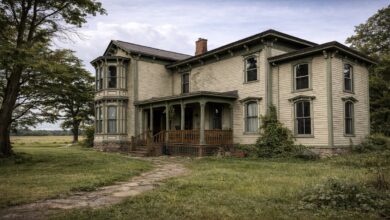
In the town of St. Francisville, shaded by sprawling live oaks and Spanish moss, Myrtles Plantation stands as one of the most discussed historic residences in the American South. Built in the late 18th century, the house has been associated with plantation life, generational ownership, and later public fascination shaped by storytelling and interpretation. Its reputation, often framed through accounts of lingering presence, is inseparable from the way history, memory, and environment converge within a long inhabited domestic space.
The Myrtles Plantation is frequently described through sensational language, yet its enduring significance is grounded in documented social history. Enslavement, family continuity, illness, and transition define the estate far more clearly than any single narrative. The plantation’s impact comes from accumulation rather than anomaly.
Origins in the late 18th century
Construction of the Myrtles Plantation began in 1796 during a period of territorial expansion and agricultural development in Louisiana. The house was built as a working plantation residence, designed to support both domestic life and the management of surrounding land.
Its architectural style reflects regional adaptation rather than grandeur. Wide verandas, tall windows, and elevated foundations were practical responses to heat, humidity, and seasonal flooding. The structure prioritized airflow and shade over ornament. Similar human responses to silence and environment appear in Harrisville House.
From its beginning, the plantation was a site of labor as much as residence.
Plantation life and social structure
Like all plantations of its era, the Myrtles functioned within a system dependent on enslaved labor. Enslaved individuals maintained the estate, cultivated crops, and supported daily operations.
This reality forms the foundation of the site’s historical weight. Domestic routines within the house were sustained by enforced labor outside of it. Any understanding of the plantation divorced from this context is incomplete.
The plantation was not merely a home. It was an institution embedded in an unequal system.
Generational ownership and continuity
Over the nineteenth century, the Myrtles Plantation passed through multiple owners, many connected through family lines. This continuity allowed stories, habits, and interpretations to accumulate.
Deaths from illness were common in this period, particularly among children. Medical understanding was limited. Disease outbreaks affected families regardless of status.
Loss and grief were part of ordinary life, and they left emotional impressions that later generations remembered selectively.
Architecture and perception
The house’s design plays a significant role in how it is experienced. Long corridors, high ceilings, and reflective surfaces influence light and sound. Floorboards respond audibly to movement. Temperature shifts between rooms.
These sensory conditions are typical of historic Southern homes. In isolation or quiet, such features become more noticeable.
Architecture shapes perception without intent.
The role of environment
The plantation’s setting contributes strongly to atmosphere. Mature oak trees filter light unevenly. Moss moves with subtle wind. Shadows shift throughout the day.
Natural surroundings often influence emotional response. Stillness can feel pronounced. Silence feels deliberate.
These environmental qualities are not unique to the Myrtles, but they frame experience powerfully.
Emergence of narrative reputation
Accounts associated with the Myrtles Plantation expanded primarily in the twentieth century, long after its construction and early use. Stories circulated describing unusual experiences, often tied to specific rooms or features.
These narratives were not contemporaneous records. They were retrospective interpretations layered onto known history.
Once formalized through publication and guided tours, these stories gained stability.
Interpretation and expectation
When visitors arrive with prior knowledge, perception shifts. Attention narrows toward anticipated features. Ordinary stimuli gain emphasis.
Psychological research consistently demonstrates that expectation shapes experience. The Myrtles Plantation exemplifies this process clearly.
Interpretation becomes part of the site’s function.
Domestic space and emotional imprint
Domestic spaces accumulate meaning differently than public ones. Bedrooms, staircases, and dining rooms are sites of routine and vulnerability.
When such spaces persist across generations, they compress memory. Later occupants inherit rooms already heavy with association.
The Myrtles Plantation retained domestic continuity longer than many comparable estates.
Distinguishing documentation from narrative
Documented history at the Myrtles includes ownership records, architectural development, and known deaths due to illness. These facts are verifiable.
Narrative elements attached later often extend beyond documentation. They reflect cultural storytelling rather than archival record.
Both exist, but they should not be conflated.
Cultural appetite for plantation stories
Plantation houses occupy a complicated place in American memory. They represent wealth, exploitation, family legacy, and loss simultaneously.
This complexity makes them fertile ground for narrative expansion. Stories become a way to process unresolved history.
The Myrtles Plantation became one such focal point.
Preservation and public access
Unlike abandoned sites, the Myrtles Plantation remained maintained and later opened to the public. Restoration preserved structure while emphasizing historical character.
Public access introduces guided interpretation. Narratives become curated. Visitor experience becomes structured.
This transition alters how memory is transmitted.
Why unease is reported
Reports of unease at the Myrtles are best understood as emotional responses to context. Knowledge of enslavement, death, and continuity influences perception.
The house does not generate sensation independently. It frames it.
Unease reflects awareness rather than anomaly.
The role of repetition
Stories persist because they are repeated. Each retelling reinforces familiarity. Over time, repetition substitutes for verification.
The Myrtles Plantation’s reputation stabilized through this process.
Narrative became expectation.
A site shaped by contradiction
The plantation embodies contradiction. Beauty exists alongside brutality. Continuity exists alongside loss. Hospitality exists alongside historical injustice.
These contradictions create cognitive tension. Tension invites interpretation.
The site’s emotional impact emerges from this unresolved balance.
Modern responsibility in interpretation
Responsible engagement with the Myrtles Plantation requires acknowledging its full history. Emphasis on narrative without context risks distortion.
Understanding demands restraint and clarity.
The site is not a backdrop for speculation. It is a record of lived systems.
Comparison with other historic plantations
Many historic plantations share similar architectural features and social histories. What distinguishes the Myrtles is not uniqueness of experience, but persistence of narrative focus.
The plantation became a symbol rather than merely a structure.
Symbolism amplified attention.
Memory anchored in continuity
Because the house was never erased or abandoned, memory remained anchored physically. Rooms remained usable. Objects remained visible.
This anchoring strengthens emotional response.
Places that persist feel closer than those that vanish.
Between history and imagination
The Myrtles Plantation exists at the intersection of history and imagination. Neither alone explains its reputation.
History provides weight. Imagination provides narrative.
Understanding requires holding both without confusion.
A landscape of layered meaning
From its construction through enslavement, family life, illness, and later public attention, the Myrtles Plantation accumulated meaning gradually.
No single moment defines it. Accumulation does.
This layering sustains its presence in cultural memory.
Enduring Perspective
The Myrtles Plantation endures not because of mystery, but because it concentrates unresolved history within a continuous domestic space. Its architecture holds routine. Its land holds labor. Its stories reflect how later generations interpreted what they inherited.
The estate stands as a reminder that places shaped by inequality and continuity rarely settle into silence. Meaning persists, shaped by who tells the story and how carefully it is framed.
In St. Francisville, under the shade of centuries old oaks, the Myrtles Plantation remains a site where memory, environment, and interpretation continue to overlap. Its presence is sustained not by what cannot be proven, but by what cannot be ignored. Related reflections on memory and perception can also be found in The McRaven House.
Horizon Report documents places shaped by memory, infrastructure, and human decisions. Our editorial approach focuses on what remains physically visible, how abandonment unfolds over time, and how interpretation is clearly separated from observable evidence.
For readers seeking deeper context, the following background articles explore how ghost towns emerge, why communities are left behind, and why preservation matters in understanding collective history.
- Abandonment And Ghost Towns
- What Is A Ghost Town
- Why Towns Are Abandoned
- Preserving Abandoned Places
Editorial transparency matters. Observations are grounded in site layout, materials, remaining structures, and documented timelines where available. Interpretive layers are presented as interpretation, not assertion.
Careful readers often notice details worth refining. Thoughtful feedback helps ensure accuracy, clarity, and long term editorial integrity.