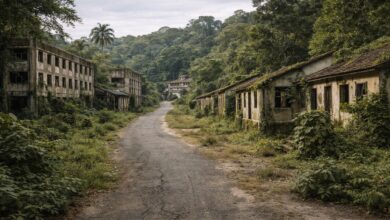
On the outskirts of Cluj-Napoca, the Hoia Baciu Forest stretches across gently rolling terrain. It is an ordinary forest in appearance, composed of deciduous trees, footpaths, and clearings used by locals for walking and recreation. Yet over time, Hoia Baciu has become associated with reports of unusual experiences and observations that resist consistent explanation. Its reputation does not rest on a single event or verified cause, but on accumulation: many accounts, few conclusions.
Hoia Baciu is often described as mysterious or unsettling, but such labels obscure a more instructive reality. The forest represents a place where perception, environment, and expectation interact. Its story is less about hidden forces and more about how uncertainty persists when observations are inconsistent, contexts vary, and narratives reinforce one another.
A forest without a single origin story
Unlike sites tied to a specific disaster, legend, or historical rupture, Hoia Baciu lacks a defining origin moment. There is no founding myth, no recorded catastrophe, no archaeological discovery that anchors its reputation.
Instead, its identity emerged gradually through anecdotal reports beginning in the mid twentieth century. These accounts varied widely in detail and intensity, ranging from visual anomalies and disorientation to feelings of unease. Importantly, no two descriptions fully align.
This absence of a central narrative is key. Hoia Baciu’s reputation formed through repetition rather than evidence. Similar human responses to silence and environment appear in Aokigahara Forest.
Geography and ordinary features
Geographically, Hoia Baciu is unremarkable. The forest lies on modest hills, with uneven ground, shallow valleys, and occasional open clearings. Soil composition varies, and tree growth patterns are influenced by light exposure, wind, and historical land use.
Some trees appear twisted or asymmetrical, a feature often highlighted in photographs. However, such growth patterns are common in forests affected by prevailing winds, competition for light, and regrowth after logging.
The environment itself does not suggest anomaly. It suggests variability.
The role of the clearing
One of the forest’s most discussed features is a circular clearing where vegetation is sparse. The clearing has been photographed repeatedly and often cited as evidence of something unusual.
From an ecological perspective, such clearings can result from soil compaction, drainage differences, past human activity, or localized conditions that inhibit growth. Without longitudinal soil and environmental studies, attributing cause remains speculative.
What matters is not the clearing itself, but how it has been framed. It became a focal point for interpretation, drawing attention disproportionate to its physical characteristics.
Inconsistent observations
Reports associated with Hoia Baciu vary significantly. Some visitors describe strange lights. Others report equipment malfunction. Some feel disoriented. Many report nothing unusual at all.
This inconsistency complicates evaluation. Verifiable phenomena typically produce repeatable results under similar conditions. Hoia Baciu does not.
The lack of consistent patterns suggests that experiences are influenced by variables external to the forest itself, including expectation, environmental conditions, and individual perception.
Environmental factors and perception
Forests can affect human perception in subtle ways. Dense foliage alters light. Shadows shift rapidly. Sounds are absorbed or redirected. Uneven terrain affects balance and orientation.
In Hoia Baciu, these effects may be amplified by the forest’s layout. Paths curve. Visibility changes quickly. Clearings interrupt visual continuity.
Such environments can heighten awareness and trigger discomfort without external cause. The mind responds to ambiguity by filling gaps.
Psychological priming
One of the most significant factors shaping experience in Hoia Baciu is prior knowledge. Visitors who arrive expecting anomaly are more likely to interpret ordinary sensations as unusual.
This phenomenon, known as psychological priming, is well documented. Expectation influences perception, memory, and emotional response.
Once a place gains a reputation, that reputation becomes part of the experience. The forest does not need to change. Interpretation does.
Media reinforcement
Hoia Baciu’s reputation expanded significantly through media coverage. Articles, documentaries, and online content emphasized mystery, often repeating the same limited set of anecdotes.
Over time, repetition created familiarity. Familiarity created credibility. The forest became known not for what it reliably does, but for what it is said to do.
This cycle mirrors how many unresolved narratives persist. Attention amplifies uncertainty rather than resolving it.
Absence of conclusive evidence
Despite decades of interest, no verifiable data supports claims of unusual physical phenomena in Hoia Baciu. No consistent electromagnetic anomalies have been recorded. No biological hazards unique to the forest have been identified.
This absence does not disprove individual experiences. It contextualizes them. Experiences can be real without indicating external cause.
The distinction between experience and explanation is critical.
Hoia Baciu as a cultural site
Hoia Baciu functions today less as a scientific puzzle and more as a cultural artifact. It represents how places acquire meaning through story rather than structure.
The forest is not protected as a hazard zone or studied as an anomaly. It remains accessible, used daily by people with no unusual experiences at all.
Its reputation exists alongside normal use, not instead of it.
The persistence of uncertainty
Uncertainty is uncomfortable. Humans seek resolution. When resolution does not arrive, narrative fills the space.
Hoia Baciu offers no definitive answer, which allows speculation to continue. Each new account is added to the existing framework, rarely replacing it.
This persistence is not evidence of anomaly. It is evidence of how stories survive.
Comparing similar environments
Forests worldwide share similar reputations. Dense woodlands, especially near urban edges, often become associated with unease or legend. The pattern is not unique to Romania.
What distinguishes Hoia Baciu is not its environment, but the concentration of attention it has received.
Attention transforms place.
Scientific restraint and interpretation
Researchers approach sites like Hoia Baciu cautiously. Without reproducible data, claims remain anecdotal. Science prioritizes repeatability and measurement over narrative coherence.
This restraint is sometimes interpreted as avoidance. In reality, it reflects methodological limits.
Not every reported experience requires a new explanation. Many fit within known psychological and environmental frameworks.
Walking the forest today
For most visitors, Hoia Baciu is quiet and unremarkable. Paths wind through trees. Light filters through leaves. Sounds of the nearby city fade and return.
Those who walk without expectation often report nothing unusual. Those who arrive seeking meaning often find it.
The difference lies not in the forest, but in the observer.
Why Hoia Baciu endures
Hoia Baciu endures because it sits at the intersection of ambiguity and imagination. It offers just enough irregularity to sustain curiosity, but not enough clarity to resolve it.
This balance keeps the narrative alive.
The forest does not confirm or deny. It allows.
A lesson in observation
Hoia Baciu illustrates how observation is shaped by context. What people notice, remember, and report depends on framing.
When uncertainty is emphasized, perception follows.
Understanding this does not diminish experience. It explains it.
Between place and projection
Ultimately, Hoia Baciu is a forest first and a story second. Its trees, paths, and clearings operate according to ordinary ecological processes.
The stories layered onto it reflect human response to uncertainty rather than environmental anomaly.
This distinction matters. It shifts focus from seeking hidden causes to examining how meaning is constructed.
An unresolved narrative by design
Hoia Baciu has no conclusion. It remains open, accessible, and undefined. This openness sustains interest more effectively than answers ever could.
The forest continues to exist as it always has. The narrative continues to evolve around it.
In this way, Hoia Baciu is not a mystery to be solved, but a case study in how uncertainty persists when observation outpaces explanation. A place marked not by verifiable cause, but by the human need to interpret what resists clarity. Related reflections on memory and perception can also be found in Asylum 49 in Utah’s Tooele Valley.
Horizon Report documents places shaped by memory, infrastructure, and human decisions. Our editorial approach focuses on what remains physically visible, how abandonment unfolds over time, and how interpretation is clearly separated from observable evidence.
For readers seeking deeper context, the following background articles explore how ghost towns emerge, why communities are left behind, and why preservation matters in understanding collective history.
- Abandonment And Ghost Towns
- What Is A Ghost Town
- Why Towns Are Abandoned
- Preserving Abandoned Places
Editorial transparency matters. Observations are grounded in site layout, materials, remaining structures, and documented timelines where available. Interpretive layers are presented as interpretation, not assertion.
Careful readers often notice details worth refining. Thoughtful feedback helps ensure accuracy, clarity, and long term editorial integrity.